
I hope that you could relate to the previous post on analysis of one’s income. While that is necessary, analysis of one’s expenditure is rather indispensable. I say this based on two things:
- While our incomes are relatively fixed in the short run, our expenses remain largely under our control. For instance, we may choose not to spend on movie tickets in a particular month, while we cannot do much to increase our salaries in that month.
- A careful analysis of our spending patterns gives us immense knowledge of our risk type, i.e. whether we like to save before spending or spend before saving. Knowing oneself is the first step in gaining control over your finances.
Like incomes, expenses can also be divided into several meaningful categories. Trust me, the way you treat your spending will change after you read this. So here we go!
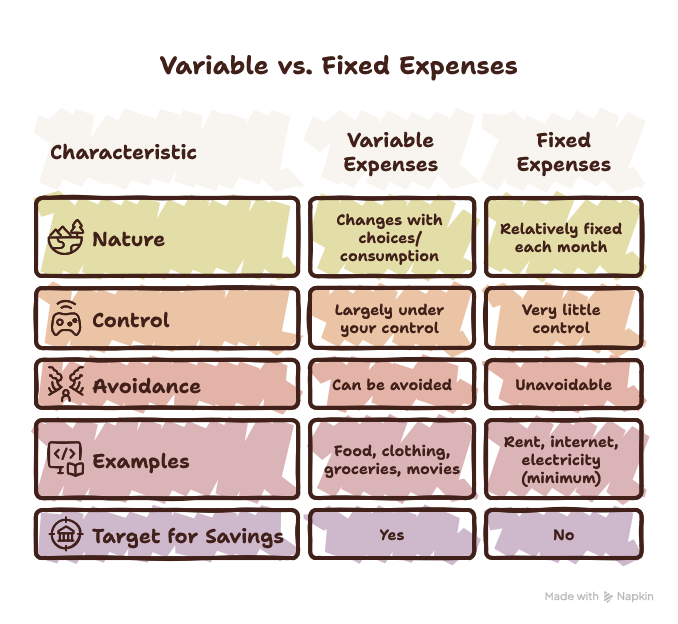
Variable versus Fixed expenses:
Variable expenses: As the name suggests, variable expenses ‘vary’ or change all the time, based on our choices and consumption patterns. If in a particular month, you choose to buy extra virgin olive oil instead of ordinary olive oil for cooking, your variable expenditure goes up. Similarly, if you take a bus to work instead of an app-based taxi, your variable expenditure comes down.
Fixed expenses: Fixed expenses are relatively fixed every month, because of some legal contract, such as rent or maintenance charges. These are ‘unavoidable’, i.e. cannot be avoided even if you have no money at all, making them highly risky in nature.
Regular versus Periodic expenses:
Regular expenses: These are regular or recurring in nature, and must be paid out every month. While they are highly predictable in nature, they end up sucking out a part of your income in every period, making them rather ‘uncontrollable’. Examples include spending on groceries, school fees for children, mobile bills, etc.
Periodic expenditure: Unlike regular expenses, these need not be incurred each month. They are need-based and may fall in any category – fixed or variable. Examples include:
- Cost of petrol (incurred only when the fuel tank is close to empty)
- Purchase of a bicycle or any other asset (barely once in several years)
- Payments made at a beauty salon/ spa (incurred as and when necessary)
- Payments for repair and maintenance of car or house property (incurred once every six months on average)
From the perspective of planning your expenses, this category offers some respite. In particularly cash-tight months, one may want to defer or postpone some of these expenses and rather spend that amount on items that sit higher on our priority list.
Bottom line: Earn at least as much as your fixed costs. Whatever is left can be used for meeting variable and periodic expenses.
Tip: To start understanding your expenses and spending habits, you could start by maintaining a dedicated notebook or diary. All your expenses – big and small – can be jotted down by date and a brief description. If you consider yourself tech-savvy, you could do the same thing on a note on your phone or even your computer. Once you have monthly records for at least six months, looking at the composite picture will give you a bird’s eye view of your income-expense-saving patterns.
Hope you found this discussion useful. And remember, if it’s your money, you choose how to spend it. Only through an understanding of patterns in your own spending behaviour can you eliminate unnecessary financial uncertainty in your life.
Leave a Reply